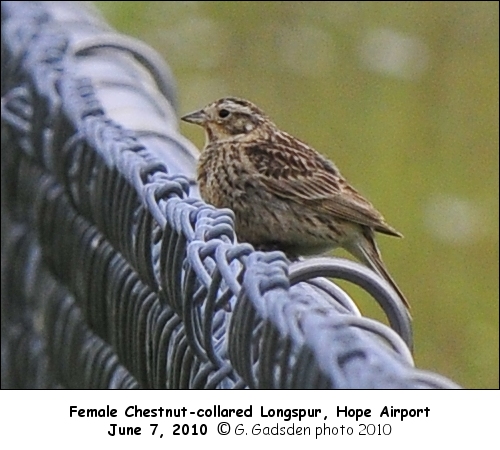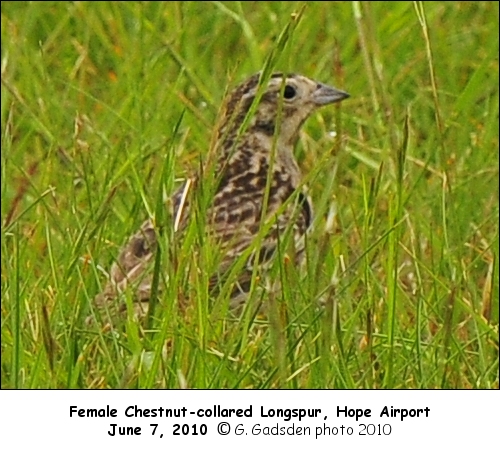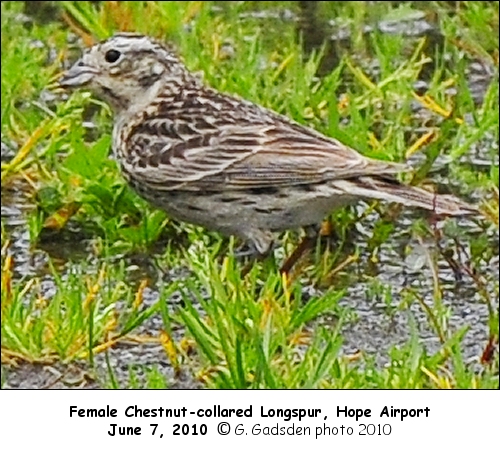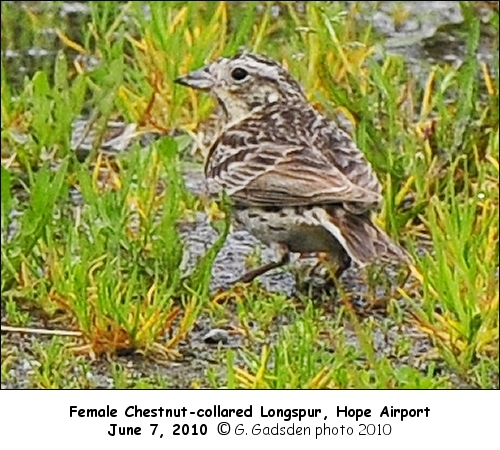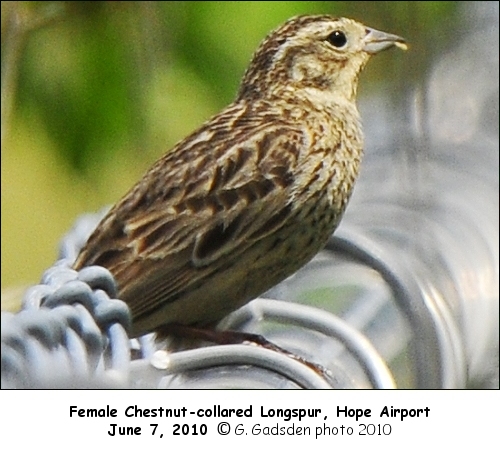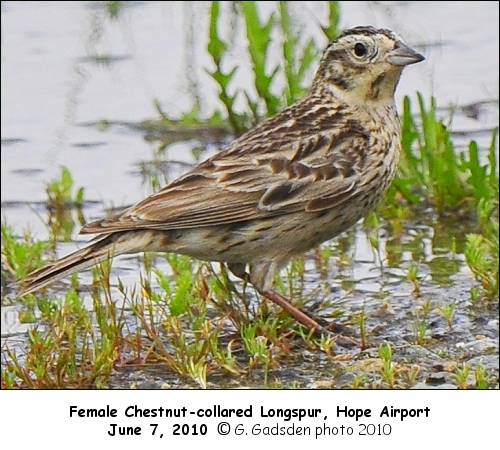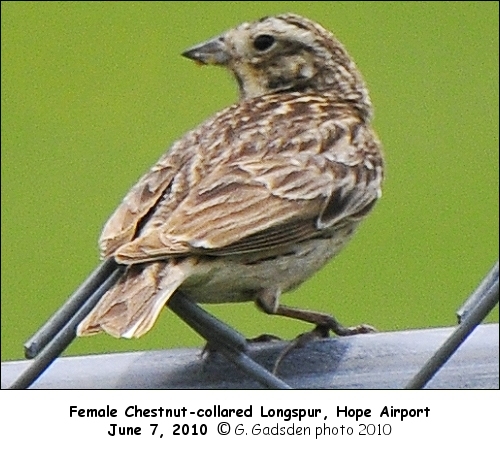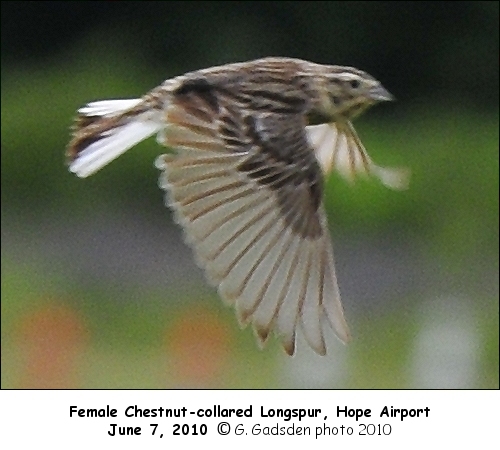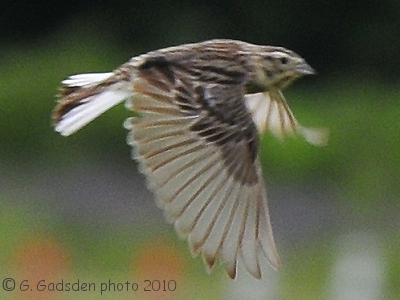

This species of longspur breeds in prairie grass as opposed to our more common Lapland Longspur that breeds in the tundra. Accidental to the west of North America as they usually stick to their breeding grounds in the Prairie Provinces and migrate straight south to the southern states and into Mexico. Nests on the ground. Will perform a distraction display, feigning an injury, to draw predators away from the nest.
Similar species:
Breeding males of all longspurs are unmistakable. Females and nonbreeding plumaged birds can be more challenging. Fairly drab and lacking rusty coverts like seen on Lapland Longspur. Considerable amount of white in the tail. The other two longspur species (Smith’s and McCown’s) would also be accidental to our area but are certainly possible and are even more similar. Consider sparrows as well (Savannah, and Vesper for starts)
Sources:
Ehrlich, Dobkin and Wheye, (1988)
Sibley, D. 2000
Noteworthy Data
Date | Location | Source(s) | Comments |
| June 16, 2011 | Hope | G. Gadsden | Female seen flying up as high as 100 feet and landing twice in a pasture field on private property. |
| June 5, 2010 | Hope Airport | N. Hughes | Female, likely age second year. Remained until June 7, 2010. |
Photos